


 Tiếng Việt
The wave of single-use plastic bag reduction presents a major challenge for businesses, ranging from stringent regulations and strict international partner standards to the market’s growing green consumer trend. In this context, equipping reusable bags for shopping is no longer a temporary fix, but has been, is, and will become a strategic investment.
The question now is no longer whether to switch to reusable bags for shopping, but how to order them to both optimize budget and elevate brand value.
What to determine before ordering reusable bags for shopping
To ensure that an order of reusable shopping bags is as effective as possible, businesses need to clarify their specific needs before diving into pricing or material considerations.
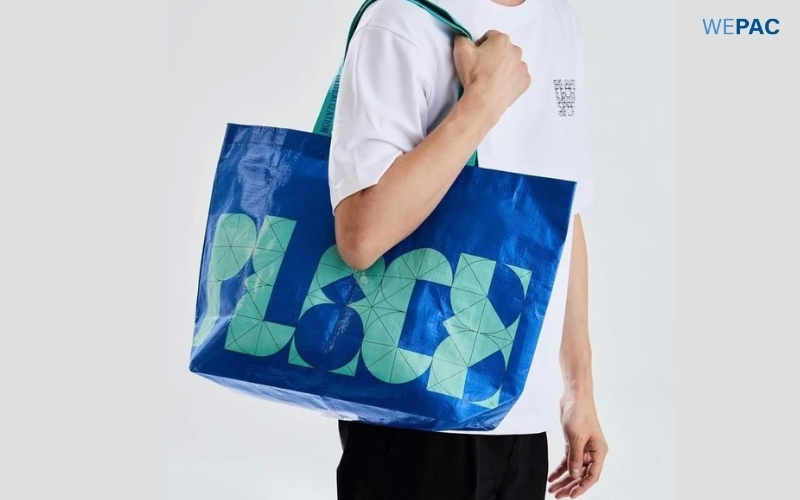
Selecting bag styles based on actual business models
The bag style is not merely an aesthetic choice; it directly impacts user convenience as well as operational efficiency for the business. Depending on the specific nature of the goods, each industry requires a compatible bag structure:
- Supermarket and retail chains: Ideal for large tote bags with wide, flat bottoms and reinforced handles, prioritizing load-bearing capacity and durability so customers can easily reuse them multiple times.
- Fashion and lifestyle: Focus on streamlined designs, standard forms, and modern color palettes, placing high emphasis on aesthetics so the bag becomes a fashionable street accessory.
- Agricultural products and dry goods: Box-bottom bags (box bags) or sturdy structures are recommended to help the bag stand upright independently, protecting the products inside and facilitating easy loading and unloading.
- Events and trade fairs: Suitable for drawstring bags, foldable bags, or goody bags to optimize costs, ensure quick production times, and offer convenience for visitors to carry around.
- Pharmaceuticals and cosmetics: Best fitted with compact styles or elegant covered box bags that convey a neat appearance and elevate the high-end positioning of the products.
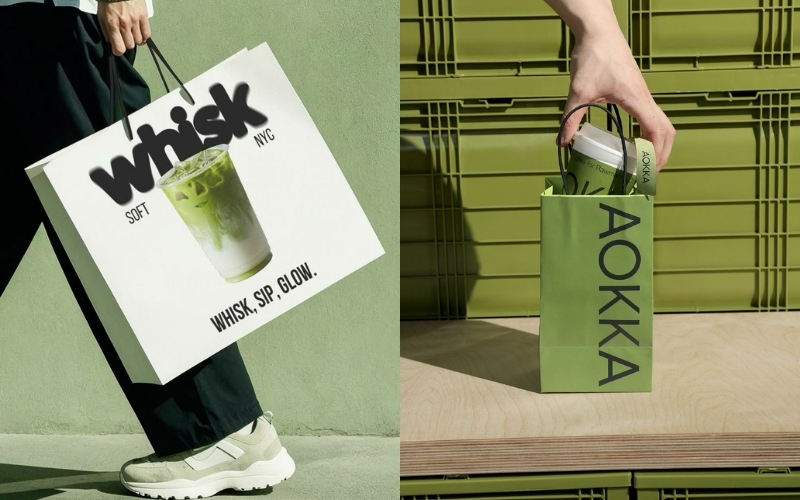
Budget and marketing goals for reusable bags for shopping campaigns
Budget and communication goals directly determine the choice of materials, printing technology, and minimum order quantity (MOQ).
- Short-term campaigns: Priority should be given to cost-effective materials like non-woven PP, combined with simple screen printing and flexible MOQs for easy budget control.
- Fixed add-on bags at point-of-sale (POS): Investments should be made in durable materials such as woven PP, sharp rotogravure printing, and large-volume orders to optimize the per-unit production cost.
- Sustainability campaigns (ESG): Prioritize GRS-certified recycled RPET fabric. Although the initial cost is higher, the resulting communication value and brand prestige are substantial.
Quality evaluation criteria for reusable bags for shopping
The lifespan of a reusable bag for shopping represents the duration of brand exposure. As long as the bag remains in use, the brand stays visible.
Evaluating durability, stitching, and actual load capacity
The actual durability of a reusable bag for shopping is measured by the strength at key stress points, specifically the handles and bottom. The handle attachment points must be thoroughly reinforced using appropriate technical solutions to eliminate the risk of tearing while maintaining overall aesthetic quality. Additionally, bag quality should be verified through practical load-testing according to the enterprise’s target weight capacity. Furthermore, depending on industry standards in retail, food, or export, quality control through needle and metal detection is a mandatory step to ensure finished products are entirely free from foreign objects or broken needles.
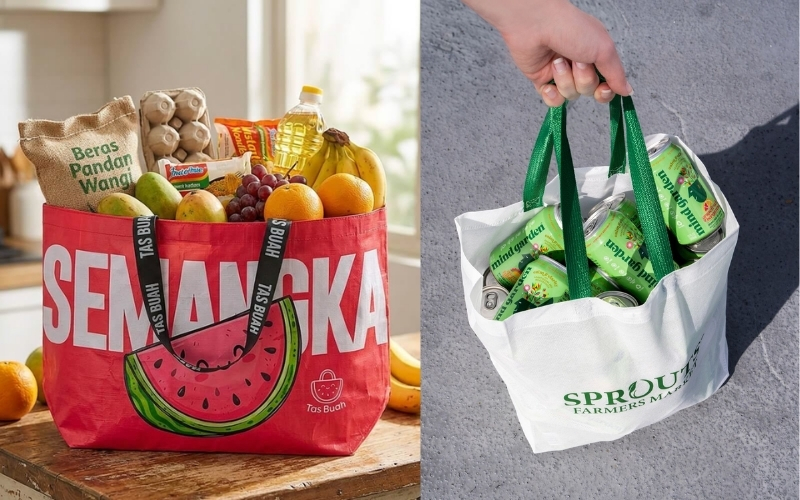
Brand recognition capability through reusable bags for shopping
From a marketing perspective, a standard reusable bag for shopping must serve as an accurate and consistent brand touchpoint. Printing quality is inspected based on the following criteria:
- Color accuracy: Printed colors on the bag must match the brand identity’s Pantone standards. For large-volume orders, rotogravure printing technology is a mandatory standard to ensure this color consistency.
- Sharpness and detail coverage: Fine lines, typography, and logos must be crisp without any ink smudging.
- Surface finishing: The surface finish should align with brand positioning, gloss lamination to maximize vibrant, eye-catching appeal, or matte lamination to create a smooth, luxurious feel.
Material selection for manufacturing reusable bags for shopping
Accounting for over 60% of total production costs, selecting the right material across WEPAC’s customizable shopping bag catalog is the single most critical investment decision.
Differentiating woven PP, non-woven PP, RPET, and Kraft paper
Each material possesses a distinct character. Understanding the technical specifications of each fabric enables businesses to quickly narrow down the optimal choice for their campaigns.
- Woven PP: Woven from tough polypropylene plastic fibers, this material is the absolute champion of mechanical durability and load-bearing capacity. It serves as the top choice for supermarket chains and retail giants.
- Non-woven PP: Formed by heat-bonding PP fibers together, this fabric offers a lightweight, breathable, and easily moldable structure (read our guide on non-woven PP bag manufacturing). Featuring moderate strength and very economical production costs, it provides ultimate flexibility for fashion retail and corporate events.
- Recycled RPET fabric: A remarkable second life given to post-consumer PET plastic bottles. Highly durable options like the RPET shopping bag are lightweight, resilient, and backed by Global Recycled Standard (GRS) certification, making them the ideal choice for businesses looking to reinforce their ESG commitments and win over conscious consumers.
- Kraft paper: Made from natural wood pulp, Kraft paper exudes a unique rustic charm with a minimalistic and elegant look. Despite limited moisture resistance, it remains highly favored for indoor retail environments.
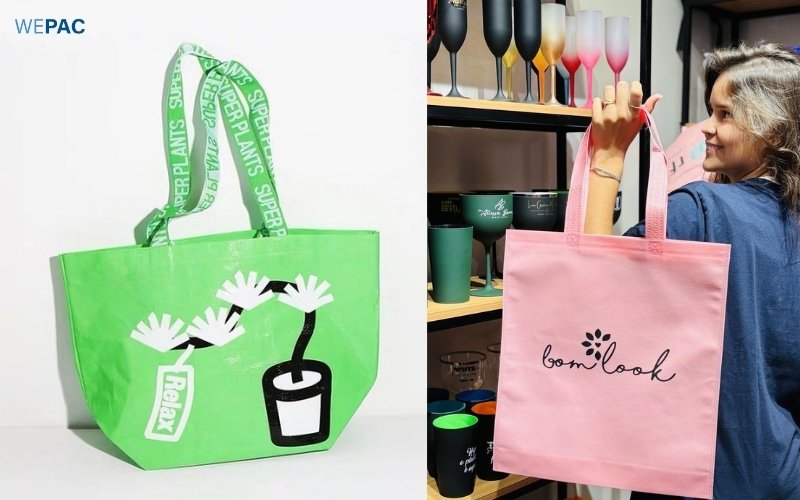
Selecting optimal materials for reusable bags for shopping for businesses
Every material addresses a specific need. To balance budget efficiency and marketing impact, businesses can refer to the quick matrix below to find their best fit.
- Prioritizing heavy load capacity and long-term reuse: Opt for woven PP (grammage from 120 GSM) to handle high-volume packaging needs or FMCG products.
- Prioritizing cost optimization and campaign reach: Opt for non-woven PP to stretch the budget for promotional giveaways, trade shows, or event gifts.
- Prioritizing a green brand narrative:Opt for GRS-certified RPET fabric to elevate brand reputation, especially when targeting premium customer segments or export markets (EU, US).
- Prioritizing an organic and rustic experience: Opt for Kraft paper for organic produce lines, natural cosmetics, designer fashion, or curated corporate gifts.
Where to find manufacturing partners for reusable bags for shopping
A beautiful design only holds real value when accurately brought to life. A reputable manufacturer is the decisive link determining whether the bag reaching customers is sharp, delivered on time, and fully functional in practical use.
Evaluation criteria for manufacturer OEM/ODM experience
A reliable partner proves their capability not just through eye-catching catalogs, but through practical operating systems and international order handling experience:
- End-to-end manufacturing process: Full control over all stages, from yarn extrusion, fabric weaving, lamination, and printing to final sewing. This ensures consistent quality control and optimizes delivery lead times.
- Rotogravure printing technology: Guarantees crispness, reproducing brand colors and complex details with pinpoint accuracy.
- International certification portfolio: BSCI (social compliance), ISO 9001:2015 (quality management), and GRS act as mandatory passports for exporting to demanding global markets.
- Flexible OEM/ODM capabilities: The ability to produce precisely according to existing customer designs (OEM) or to consult and develop entirely new samples from scratch (ODM).
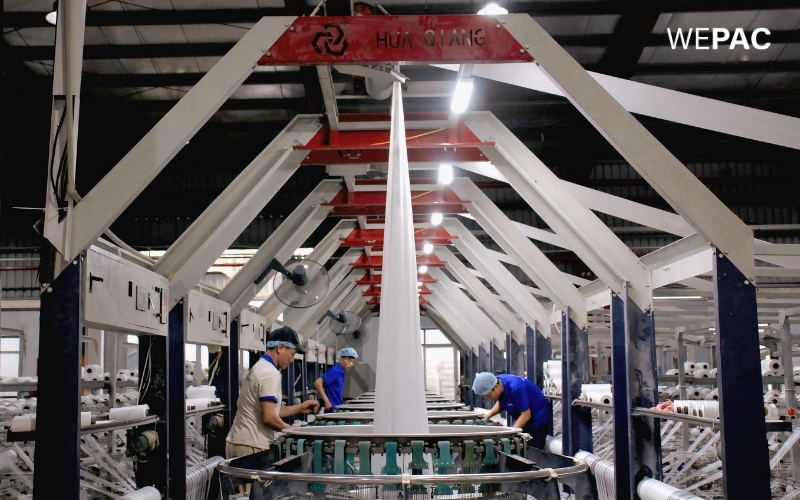
WEPAC – Pioneer in Solutions for Reusable Bags for Shopping
Established in 2017, WEPAC – Sustainable Packaging Manufacturer currently operates modern production facilities covering a total area of 2.8 hectares, powered by over 300 skilled workers and maintaining a monthly capacity of 12 million bags.
- Integrated end-to-end production: Complete control from yarn extrusion, fabric weaving, and lamination to 8-color rotogravure printing and final stitching, ensuring product uniformity across every batch.
- Benchmark international certifications: Fully accredited with BSCI, ISO 9001:2015, and GRS, ready to meet strict audits from EU, North American, and Japanese importers.
- End-to-end partnership: Supporting businesses throughout the entire journey, from material consulting and OEM/ODM sampling to full-service import-export clearance.
Conclusion
A successful campaign utilizing reusable bags for shopping is not a matter of chance, but the result of three strategic decisions: choosing the right bag structure to ensure actual function; selecting the right material to optimize budget; and most importantly, partnering with the right manufacturer possessing end-to-end processes.
Attractive packaging catches the eye, but quality packaging earns lasting trust. Mastering fully integrated manufacturing technology with a supply capacity of 12 million bags per month, WEPAC is proud to be a trusted partner accompanying businesses to turn every design concept into international-standard products.
Explore more insights on our packaging industry blog or contact WEPAC team today to receive solution consultations and develop custom prototype samples for your brand!